
LGBTQ+ History Timeline
We’ve compiled just a few of the important LGBTQ+ events that have occurred since the beginning of the 20th century. We’ve made sure to include items specific to the U.S., Canada, and the IATSE.
IATSE LGBTQ+ HISTORY
2014
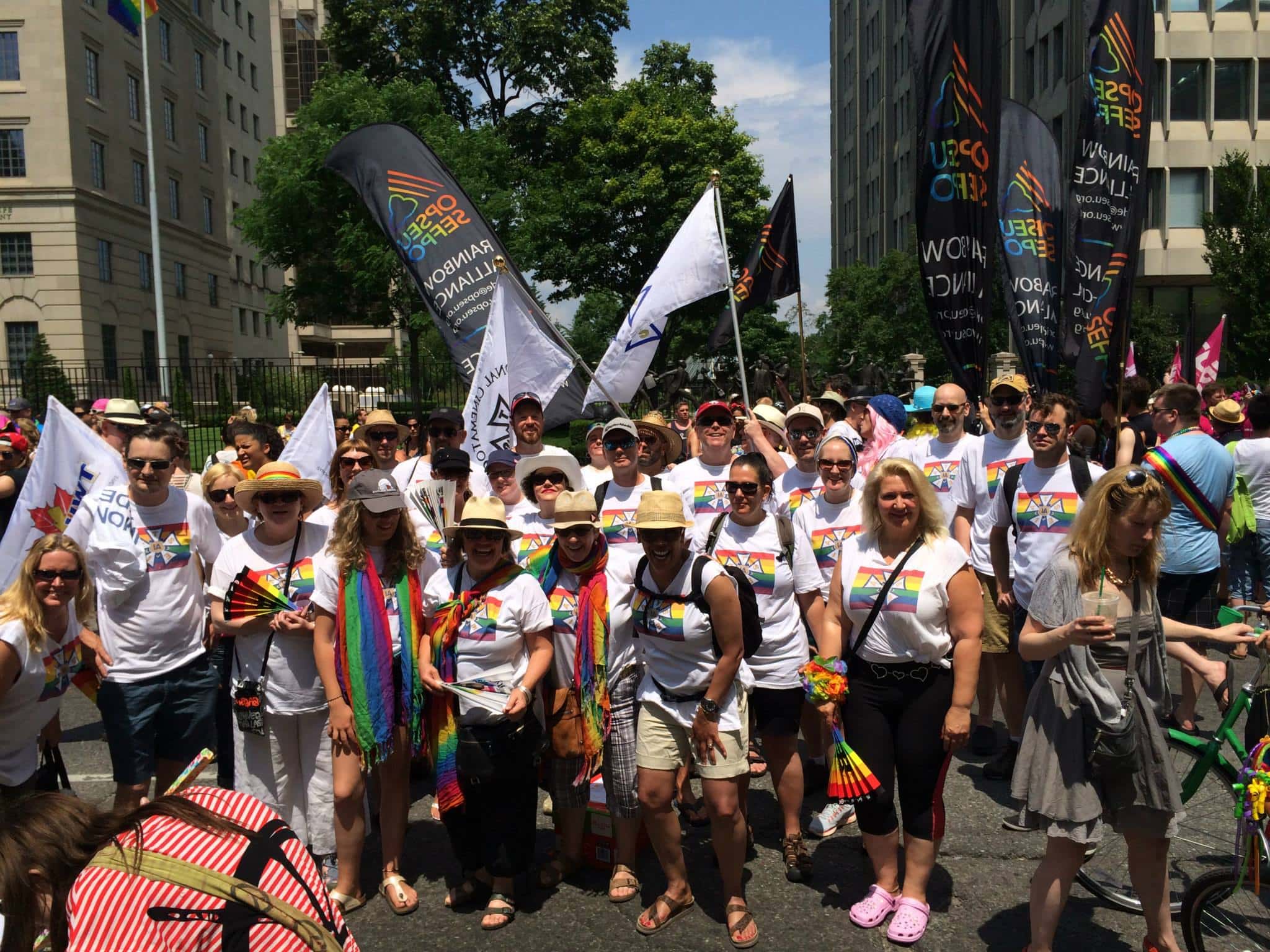
June 29: First Official Pride Participation for IATSE International
Although members and locals had participated prior to 2014, this was the first year that IATSE International marched in its first official Pride Parade which took place during WorldPride in Toronto.
2015
January: First IATSE Equality Statement
The General Executive Board unanimously approves the IATSE Equality Statement at the Winter GEB in Hollywood, Florida.
2018
July: AFL-CIO: Pride at Work
Doug Boney sworn in as the representative of the IATSE on the Pride at Work National Executive Board.
September 16th: IATSE Condoms
The IATSE Pride condoms are officially announced at the Canadian Convention in Calgary, Alberta.
November 1: CLC Solidarity & Pride Group
Nate Richmond appointed to represent the IATSE on the Canadian Labour Congress’ Pride & Solidarity Working Group.
2019
February 6: First Unofficial IATSE LGBTQ+ Meetup at a GEB
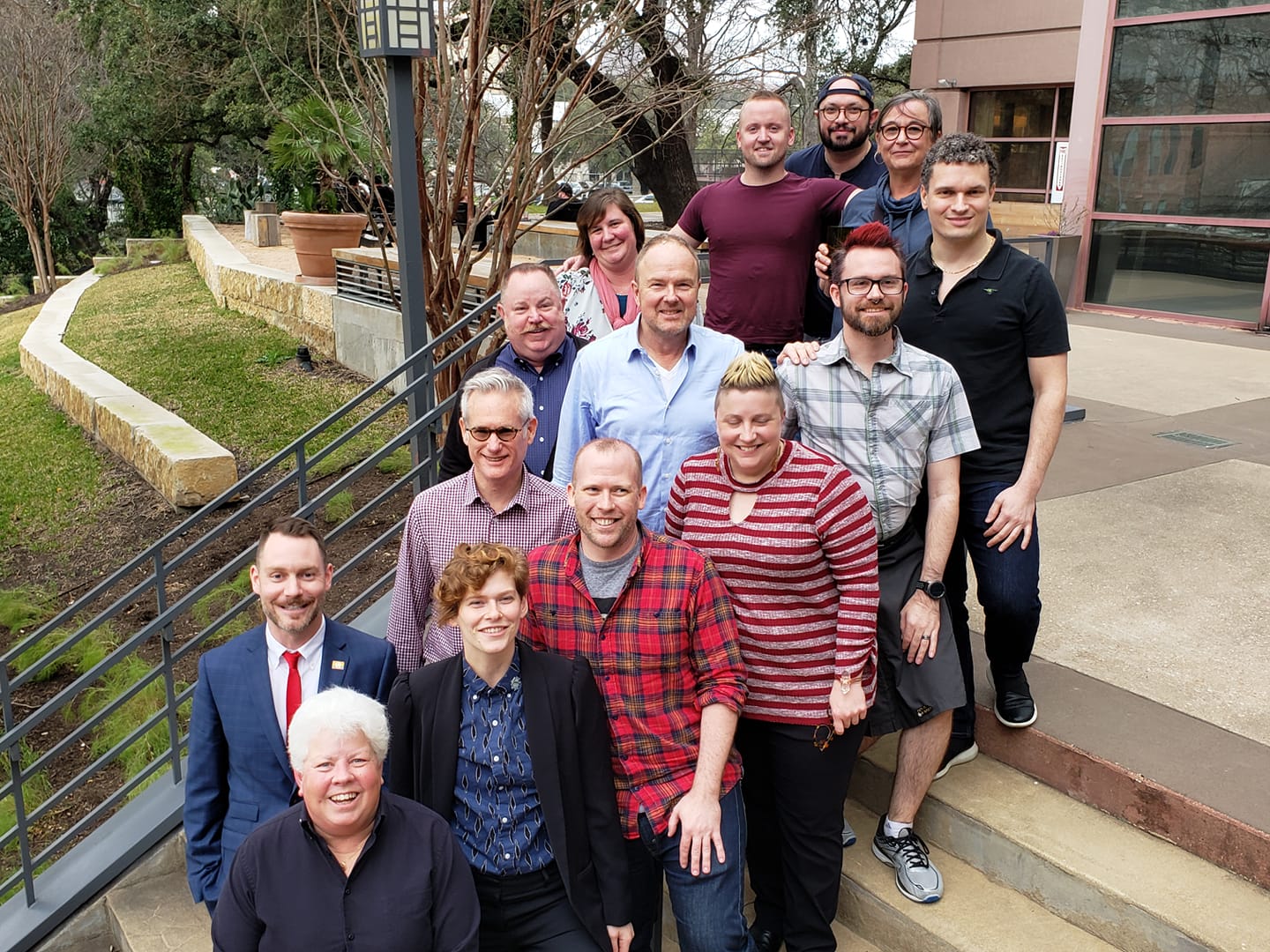
The first unofficial IATSE LGBTQ+ meetup occurs during the Winter General Executive Board meeting in Austin, Texas. By word-of-mouth, Kim Holdridge and Carl Mulert gather approximately 15 openly LGBTQ+ attendees together.
March 20: IATSE Pride Committee Established
Under his authority as IATSE International President, Matthew D. Loeb establishes the first IATSE Pride Committee and appoints Carl Mulert, Doug Boney, Kimberly Holdridge, Nate Richmond (Chair) and Rachel McLendon to serve.
June 30: WorldPride in New York City
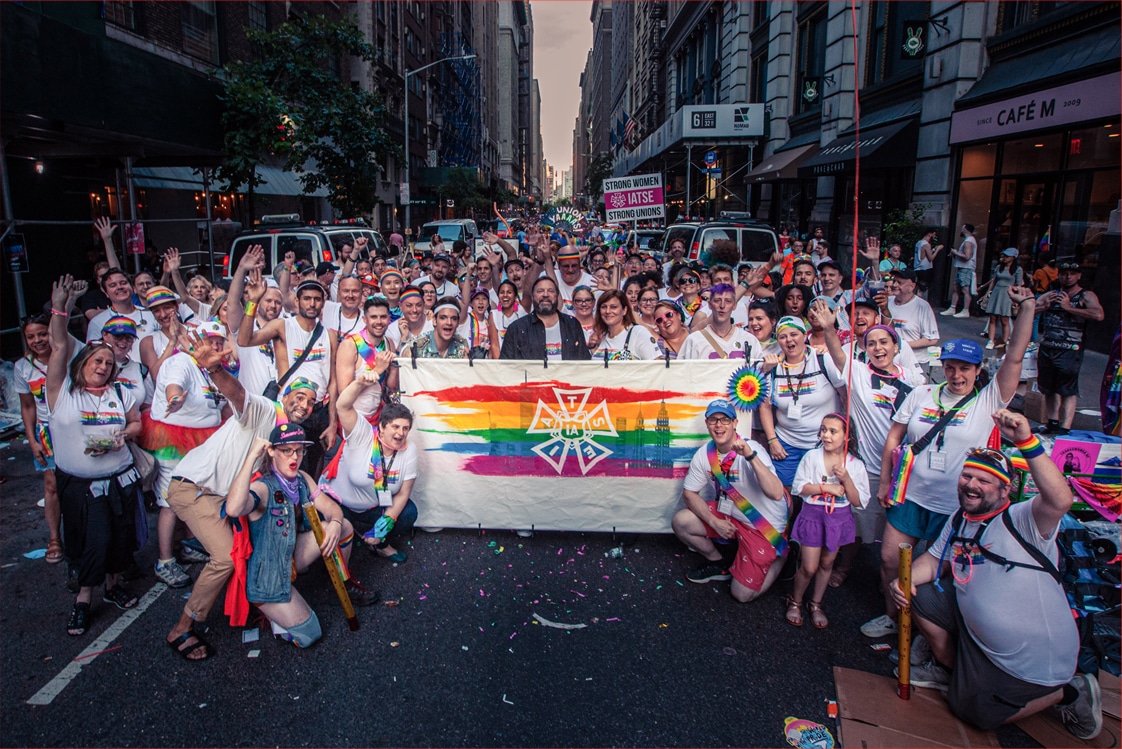
The IATSE International General Office marches in its first official Pride March during WorldPride New York City. This is also the first public event featuring the entire IATSE Pride Committee.
2021
June 26: First Pride Committee Caucus at an IATSE International Convention
The very first dedicated Pride event at an IATSE Quadrennial Convention occurred on this date at 3:00pm Eastern time. Originally meant to take place in Toronto, COVID-19 had forced the Convention online. Pride Chair Nate Richmond and committee member Carl Mulert were in studio for the event, while the others joined virtually.
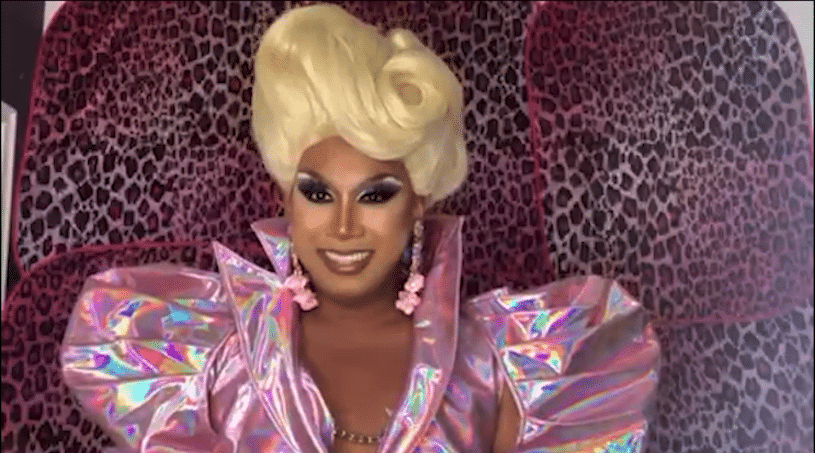
Pictured here is a local Toronto drag queen “Sofonda” who gave an introduction and performed two songs for us.
2023
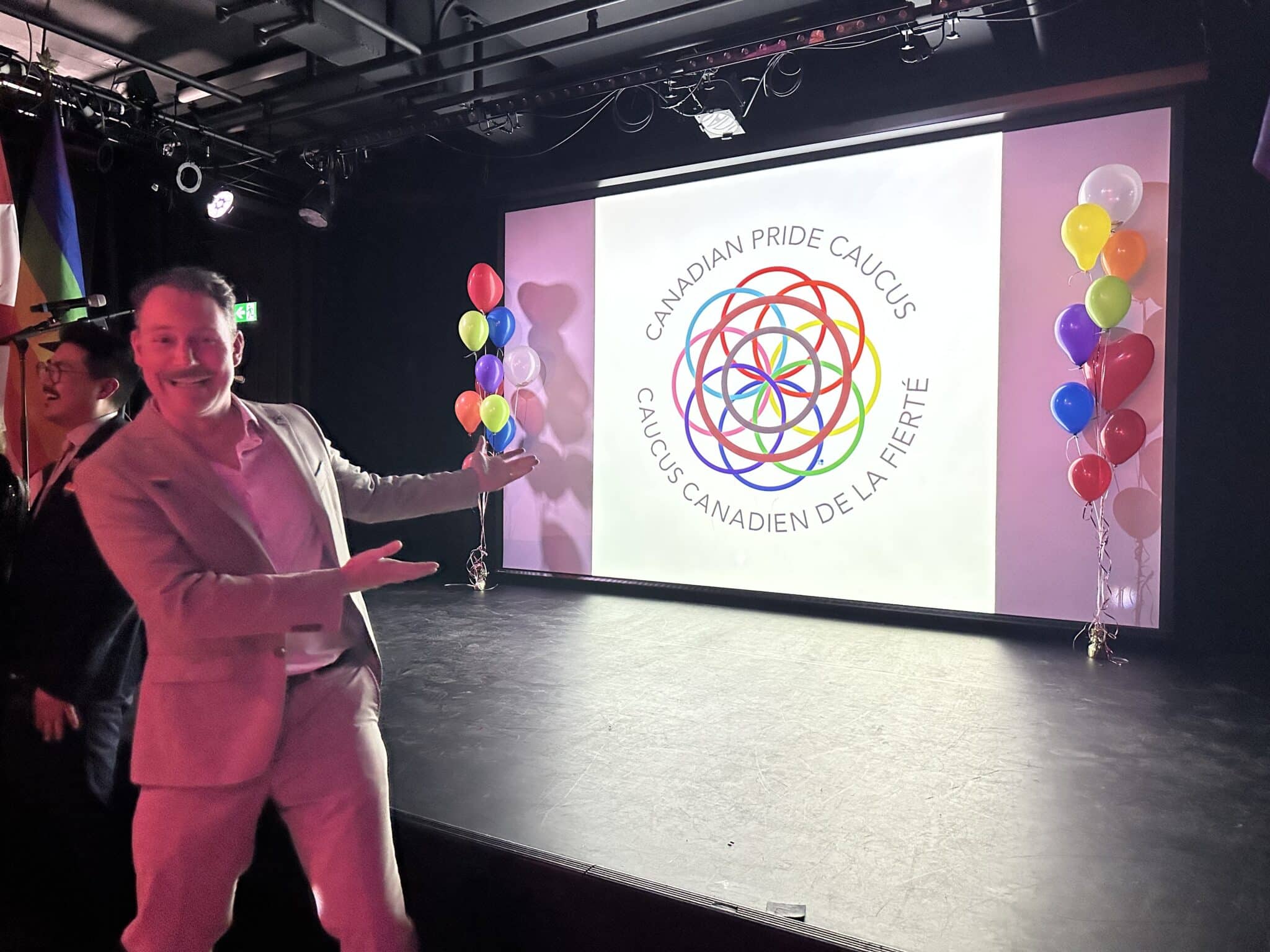
February 14: IATSE at the Inaugural Canadian Pride Caucus Event
The Canadian government unveiled the first Canadian Pride Caucus which included senators and MPs from multiple provinces and political parties. They held their inaugural event in Ottawa and Pride Chair Nate Richmond was invited to attend on behalf of the IATSE.
2024
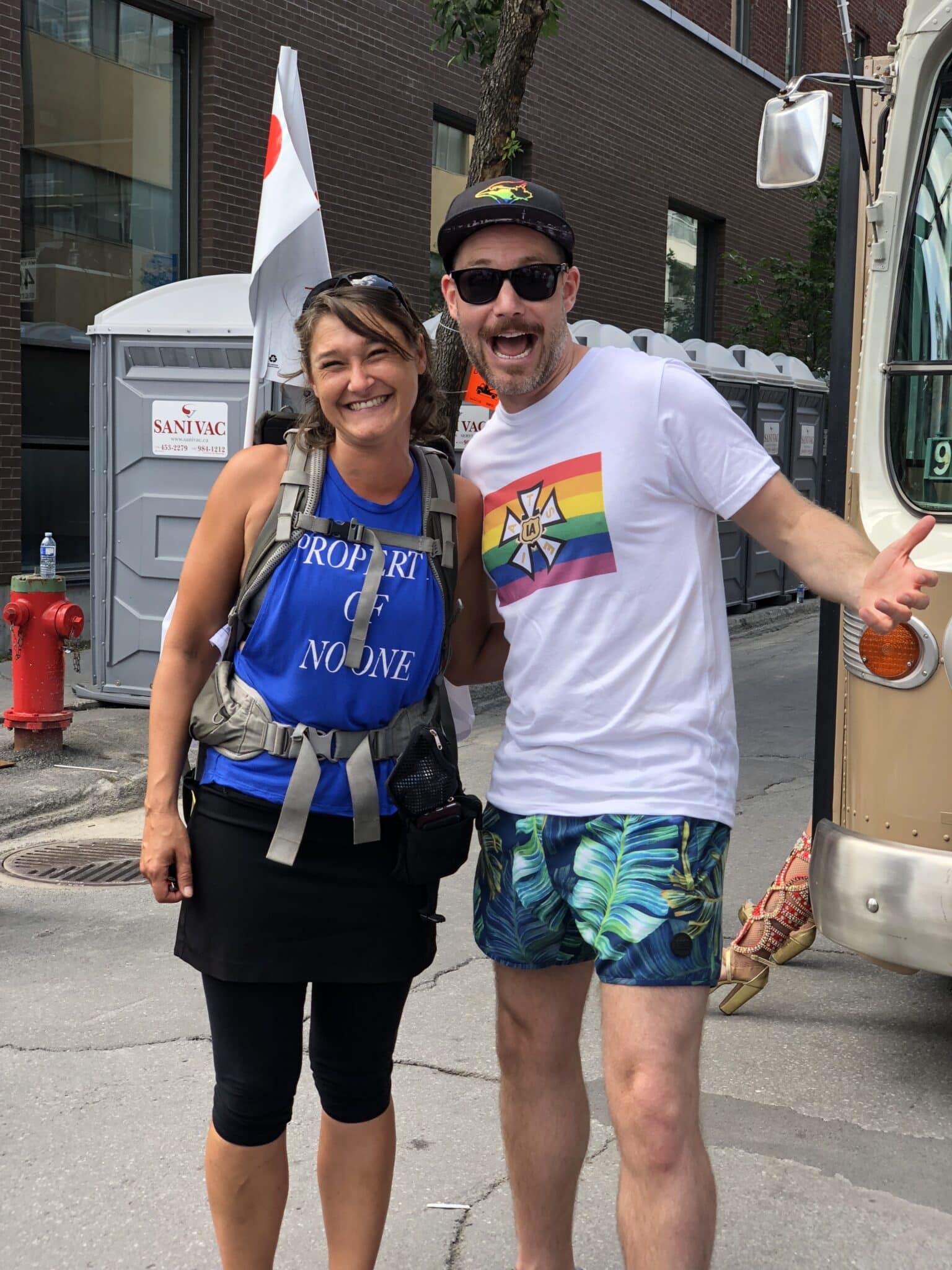
August 11: Montreal Hosts the First Fierté Canada Pride
The inaugural Fierté Canada Pride was held in Montréal, marking the first time the national organization anchored its Pride programming within a host city festival. IATSE Pride Chair Nate Richmond marched under the FTQ banner with IATSE Local 56 member Arielle Mercier.
2025
June 1: Pride Regional Coordinators Appointed
The Pride Committee introduced seven new regions and President Loeb appointed new Regional Coordinators to represent them.
They are:
- Pete Rush (he/him) – Local USA829 (Seattle) will represent Northwest USA (Districts 1&5),
- Chris Cipriaso (she/her) – Local 720 (Las Vegas) will represent Southwest USA (Districts 2&6),
- Ren Gingras (they/them) – Local 476 (Chicago) will represent Midwest USA (Districts 8&9),
- John “Jack” Curtin (he/him) – Local 798 in (New York) will represent Northeast USA (Districts 3&10),
- Paige Jarvis (she/her) – Local 479 (Atlanta) will represent Southeast USA (Districts 4&7&14),
- Monique Perro (she/her) – Local 856 (Winnipeg) will represent Western Canada (District 12), and
- Jenny Reeves (she/her) – Local 849 (Halifax) will represent Eastern Canada (District 11)
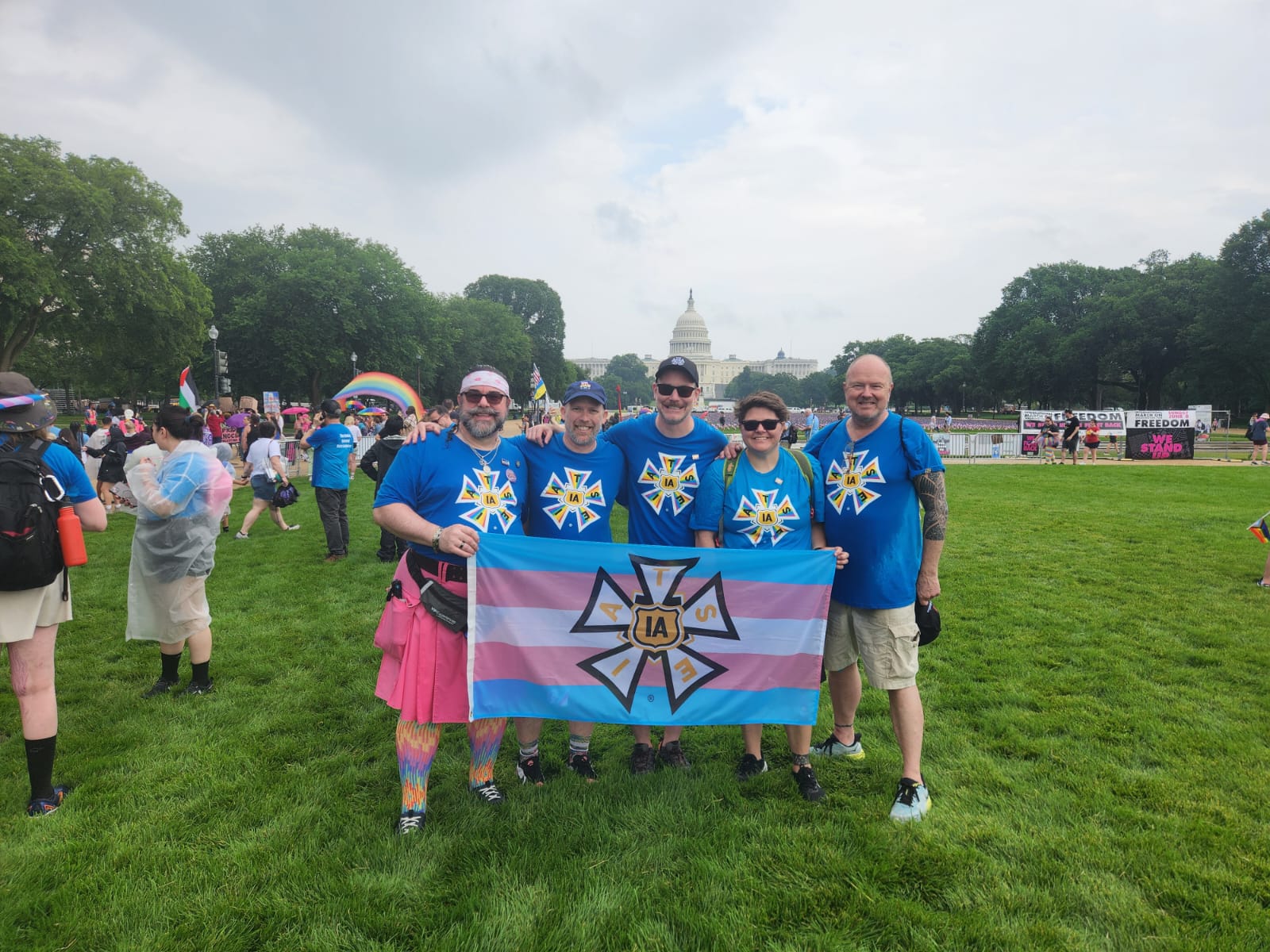
June 8: IATSE Joins the Rally/March for Freedom in D.C.
The IATSE Pride Committee, along with members of various D.C. and NYC area locals, joined the fight against hate along with thousands of community members, allies, and activists. During WorldPride in D.C., they participated in rallies at both the Lincoln Memorial and the AFL-CIO, which culminated with a march towards the US Capitol Building.
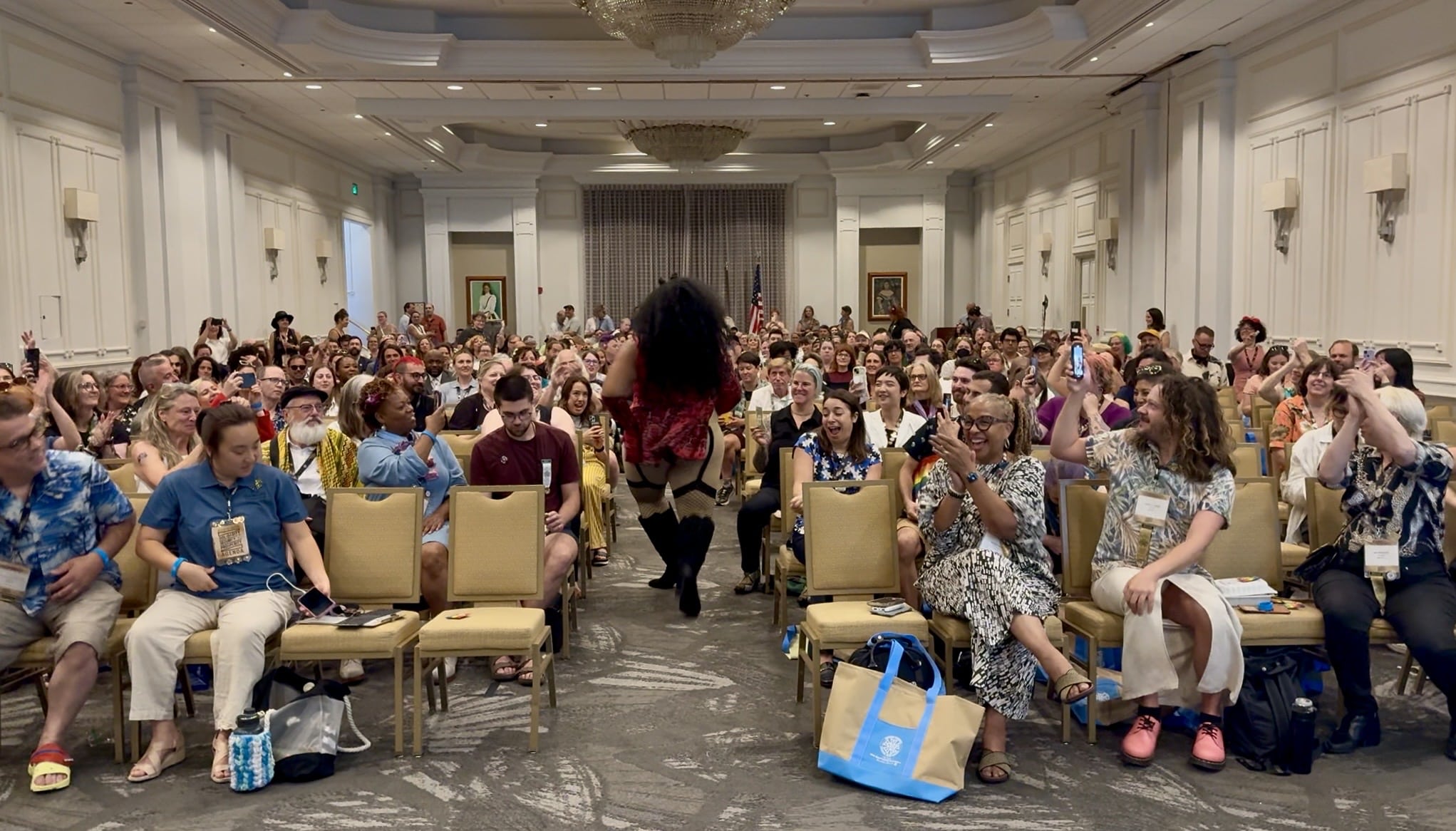
July 28: First In-Person Pride Committee Event at an IATSE International Convention
After the 2021 Convention was forced online due to COVID, we were finally able to hold the first in-person Convention event for Pride at the 2025 Quadrennial in Honolulu, Hawaii.
Pictured here is local drag queen “Maya Miracle Stone” who performed as the big finale for the crowd.
November 15: Two New Canadian Regional Coordinators Join the Pride Committee
Local 212’s Amy Dyck (they/she) appointed as the new Western Canadian Representative and Local 849’s Jake Ivany (he/him) appointed as the new Eastern Canadian Representative.


2026
March 10: Vice President Mulert Appointed Co-Chair of the IATSE Pride Committee
Thirteenth Vice-President (and first openly queer board member) Carl Mullert officially appointed by International President Loeb to serve as Co-Chair on the IATSE Pride Committee.
U.S. LGBTQ+ History
1924
December 10: First Gay Rights Organization in America Founded
The Society for Human Rights is founded by Henry Gerber in Chicago. The society is the first gay rights organization as well as the oldest documented in America. Soon after its founding, the society disbands due to political pressure.
1950
November 11: First Sustained National Gay Rights Association
In Los Angeles, gay rights activist Harry Hay founds America’s first sustained national gay rights organization. In an attempt to change public perception of homosexuality, the Mattachine Society aims to “eliminate discrimination, derision, prejudice and bigotry,” to assimilate homosexuals into mainstream society, and to cultivate the notion of an “ethical homosexual culture.”
1952
April: Homosexuality Listed as Sociopathic Personality Disturbance
The American Psychiatric Association lists homosexuality as a sociopathic personality disturbance in its first publication of the Diagnostic and Statistical Manual of Mental Disorders.
1953
April 27: Homosexual Banned From Working for the Government
President Dwight Eisenhower signs Executive Order 10450, banning homosexuals from working for the federal government or any of its private contractors. The Order lists homosexuals as security risks, along with alcoholics and neurotics.
1955
September 21: First Lesbian Rights Organization in the U.S.
In San Francisco, the Daughters of Bilitis becomes the first lesbian rights organization in the United States. The organization hosts social functions, providing alternatives to lesbian bars and clubs, which are frequently raided by police
1958
January 13: First Time the U.S. Supreme Court Rules in Favor of Homosexuals
In the landmark case One, Inc. v. Olesen, the United States Supreme Court rules in favor of the First Amendment rights of the lesbian, gay, bisexual and transgender (LGBT) magazine “One: The Homosexual Magazine.” The suit was filed after the U.S. Postal Service and FBI declared the magazine obscene material, and it marks the first time the United States Supreme Court rules in favor of homosexuals.
1962
January 1: First U.S. State Decriminalizes Homosexuality
Illinois repeals its sodomy laws, becoming the first U.S. state to decriminalize homosexuality.
1966
August: National Transsexual Counseling Unit Established
After transgender customers become raucous in a 24-hour San Francisco cafeteria, management calls police. When a police officer manhandles one of the patrons, she throws coffee in his face and a riot ensues, eventually spilling out onto the street, destroying police and public property.
Following the riot, activists established the National Transsexual Counseling Unit, the first peer-run support and advocacy organization in the world.
1969
June 28: The Stonewall Riots
Police raid the Stonewall Inn, roughing up patrons and arresting them, some for violating the state’s gender appropriate clothing statute. (The “three-piece” rule meant that men and women had to wear three items of attire conventionally associated with their gender. Female officers would take suspected cross-dressing patrons into the bathroom to verify their sex.)
One of the patrons who was arrested was a suit-wearing, gender nonconforming lesbian named Storme De Larverie. “Arent you going to do something?” she is said to have asked the crowd, sparking the collective rebellion against police. Led by trans women of colour including Marsha P. Johnson and Sylvia Rivera, everything from rocks and pennies, to bricks and Molotov cocktails were thrown. The Community who had previously felt helpless had had enough and they finally fought back.
The Stonewall Riots/Uprising are seen as one of the most important events in the fight for LGBTQ+ rights in the U.S.
June 28: America's First Gay Pride March
Christopher St. Liberation Day commemorates the one-year anniversary of the Stonewall riots. Following the event, thousands of members of the LGBT community march through New York into Central Park, in what will be considered America’s first gay pride parade.
1977
November 8: Harvey Milk Wins a Seat on the San Francisco Board of Supervisors
Harvey Milk wins a seat on the San Francisco Board of Supervisors and is responsible for introducing a gay rights ordinance protecting gays and lesbians from being fired from their jobs. Milk also leads a successful campaign against Proposition 6, an initiative forbidding homosexual teachers.
1978
November 27: Harvey Milk is Assassinated
Harvey Milk and Mayor Moscone are assassinated by Dan White, a former police officer and former city supervisor who had clashed with Milk over LGBTQ issues.
That night, Cleve Jones, a 24y/o intern of Milk’s, organized a candle-lit march from the Castro up Market Street.
1979
October 14: National March on Washington for Lesbian and Gay Rights
An estimated 75,000 people participate in the National March on Washington for Lesbian and Gay Rights. LGBT people and straight allies demand equal civil rights and urge for the passage of protective civil rights legislature.
1981
July 3: First Story Printed about GRID (AIDS)
The New York Times prints the first story of a rare pneumonia and skin cancer found in 41 gay men in New York and California. The CDC initially refers to the disease as GRID, Gay Related Immune Deficiency Disorder.
When the symptoms are found outside the gay community, Bruce Voeller, biologist and founder of the National Gay Task Force, successfully lobbies to change the name of the disease to AIDS.
1982
March 2: First State Outlaws Sexual Orientation Discrimination
Wisconsin becomes the first U.S. state to outlaw discrimination on the basis of sexual orientation.
1987
May 30: First Member of Congress Comes Out Voluntarily
Barney Frank becomes the first member of Congress to come out voluntarily. (Served 1980-2013)
1993
December 21: "Don't Ask, Don't Tell" Introduced
The Department of Defense issues a directive prohibiting the U.S. Military from barring applicants from service based on their sexual orientation. “Applicants… shall not be asked or required to reveal whether they are homosexual, ” states the new policy, which still forbids applicants from engaging in homosexual acts or making a statement that he or she is homosexual. This policy is known as “Don’t Ask, Don’t Tell.”
2003
June 26: Sodomy Laws Ruled Unconstitutional
In Lawrence v. Texas the U.S. Supreme Court rules that sodomy laws in the U.S. are unconstitutional.
2004
May 18: First State Legalizes Gay Marriage
Massachusetts becomes the first state to legalize gay marriage. The court finds the prohibition of gay marriage unconstitutional because it denies dignity and equality of all individuals.
2009
October 28: The Matthew Shepard Act is Passed by Congress
The Matthew Shepard Act is passed by Congress and signed into law by President Obama on October 28th. The measure expands the 1969 U.S. Federal Hate Crime Law to include crimes motivated by a victim’s actual or perceived gender, sexual orientation, gender identity or disability.
Matthew Shepard was tortured and murdered near Laramie, Wyoming on October 7, 1998 because of his sexual orientation.
2010
December 8: "Don't Ask, Don't Tell" Repealed
The U.S. Senate votes 65-31 to repeal “Don’t Ask, Don’t Tell” policy, allowing gays and lesbians to serve openly in the U.S. Military.
2015
June 26: Same-Sex Marriage Legalized in the U.S.
With a 5-4 decision, the U.S. Supreme Court declares same-sex marriage legal in all 50 states.
2020
June 15: Civil Rights Act Protects Gay and Transgender Workers
The Supreme Court rules (6-3) that the langauge of the Civil Rights Act of 1964 protects gay and transgender workers from workplace discrimination.
“An employer who fires an individual merely for being gay or transgender defies the law,” Justice Neil M. Gorsuch wrote for the majority.
2025
August 25: Illinois launches first-in-nation LGBTQ+ legal hotline
On August 21, 2025, Illinois announced the creation of a first-of-its-kind legal hotline dedicated to the LGBTQ+ community. The hotline, operated through the Legal Council for Health Justice, provides free legal advice and resources to address discrimination, harassment, and other legal challenges. The service officially became available to the public on August 25, 2025.
Canadian LGBTQ+ History
1918
1918: First known North American LGBT publication
Montreal writers Elsa Gidlow and Roswell George Mills launch “Les Mouches fantastiques”, a mimeographed underground magazine which is the first known LGBT publication in Canadian and North American history. At least five issues are published before Mills and Gidlow move to New York City in the early 1920s.
1960s
RCMP and FBI Collaborate on Surveillance of Canadian Homosexuals
The RCMP, throughout the late 1950s and the entirety of the 1960s, kept tabs on homosexuals and the patrons of gay bars in Ottawa and other cities. The force also worked with the FBI’s own surveillance of homosexuals and alerted the FBI when a suspected homosexual had crossed the border to the United States.
1967
December 22: "There's no place for the state in the bedrooms of the nation"
Justice Minister Pierre Trudeau (future Prime Minister and father of Prime Minister Justin Trudeau) proposes amendments to the Criminal Code which, among other things, would relax the laws against homosexuality.
“I think the view we take here is that there’s no place for the state in the bedrooms of the nation.” – Pierre Trudeau
1969
June 27: Homosexuality Decriminalized in Canada
Trudeau’s amendments pass into the Criminal Code, decriminalizing homosexuality in Canada.
1971
August 28: Canada's First Gay Liberation Protest and March
Roughly 100 people from Ottawa, Montreal, Toronto and the surrounding areas gathered in the pouring rain at Parliament Hill for Canada’s First Gay Liberation Protest and March. They presented a petition to the government with a list of ten demands for equal rights and protections.
1977
December 16: First Province Passes a Gay Civil Rights Law
Quebec includes sexual orientation in its Human Rights Code, making it the first province in Canada to pass a gay civil rights law.
1979
Sexual Orientation Recommended as Addition to Human Rights Act
The Canadian Human Rights Commission (CHRC) recommends in its annual report that “sexual orientation” be added to the Canadian Human Rights Act.
1981
February 5: Operation Soap aka The Toronto Bathouse Raids
More than 300 men are arrested following police raids at four gay bath houses in Toronto, the largest mass arrest since the War Measures Act was invoked during the October Crisis. The next night, about 3,000 people march in downtown Toronto to protest the arrests. This is considered to be Canada’s ‘Stonewall’.
1988
January 19: First Member of Parliament Comes Out Publicly
Svend Robinson goes public about being gay, becoming the first member of Parliament to do so. (In office 1979-2004)
1990
January: The Term "Two-Spirit" is Coined
The term Two Spirit (niizh manidoowag) is coined at the third annual Native American/First Nations Gay and Lesbian Conference in Winnipeg. The term allows Indigenous LGBTQ+ folks to reject other English terms that impose the Western views of gender and sexuality on indigenous people.
1992
November: Ban Lifted on Homosexuals in the Military
The federal court lifts the country’s ban on homosexuals in the military, allowing gays and lesbians to serve in the armed forces.
1996
June 20: Sexual Orientation Added to the Human Rights Act
The federal government passes Bill C-33 which adds “sexual orientation” to the Canadian Human Rights Act.
2003
June 10: First Province Legally Recognizes Same-Sex Marriage
Ontario becomes the first province to legally recognize same-sex marriage.
(Ontario ruled that marriages performed in January 2001 were legal when performed, and therefore the Ontario government retroactively recognizes two marriages that took place in Toronto on January 14, 2001. This technically means that Canada is the first country in the world to have a government-legitimized same-sex marriage.)
2005
July 20: Canada Becomes Fourth Country to Officially Recognize Same-Sex Marriage
Bill C-38, the law giving same-sex couples the legal right to marry, receives royal assent and becomes law. This officially makes Canada the fourth country in the world (after The Netherlands, Belgium and Spain) to officially recognize same-sex marriage.
2012
January 15: Gender Identity Added to Ontario Human Rights Code
Ontario becomes the first province to explicitly include gender identity and gender expression as prohibited grounds of discrimination in its Human Rights Code, setting a model for later federal protections.
2017
June 19: Gender Identity & Expression Added to Federal Law
Canada passes Bill C-16, adding gender identity and gender expression to the Canadian Human Rights Act and the Criminal Code of Canada. The law explicitly protects transgender and gender-diverse people from discrimination and adds gender identity and expression to hate-crime provisions. This marked the first time these protections were formally recognized in Canadian federal law.
2017
November 28: Federal Apology for the LGBT Purge
Prime Minister Justin Trudeau formally apologizes in Parliament for decades of discrimination against LGBTQ Canadians in the military, RCMP, and federal civil service during the LGBT Purge. The apology acknowledges government policies that led to surveillance, investigations, and the dismissal of thousands of suspected LGBTQ employees.
2022
January 7: Nationwide Ban on Conversion Therapy
On this date, Bill C-4 amended the Criminal Code of Canada to make conversion therapy illegal nationwide. The law criminalized causing someone to undergo the practice, as well as promoting, advertising, or profiting from it, making Canada one of the first countries to enact a comprehensive ban covering people of all ages.
 English